Fukuro Malaysia

FREQUENTLY ASKED QUESTION (FAQ)
Stainless Steel Cookware
What is stainless steel cookware used for?
Stainless steel cookware is ideal for everyday cooking such as boiling, sautéing and simmering. It offers excellent heat control and does not react with food.
Is stainless steel cookware safe for daily use?
Yes, stainless steel cookware is food-safe and does not release harmful chemicals under normal cooking conditions like proper heat, food or oil in the pan, and standard cleaning. Stainless steel remains non-toxic and completely safe for everyday cooking.
Does stainless steel cookware contain chemicals?
No chemical coatings are used on stainless steel cookware. The surface is naturally non-reactive and safe for cooking all types of food.
Can Fukuro stainless steel cookware be used on induction cooktops?
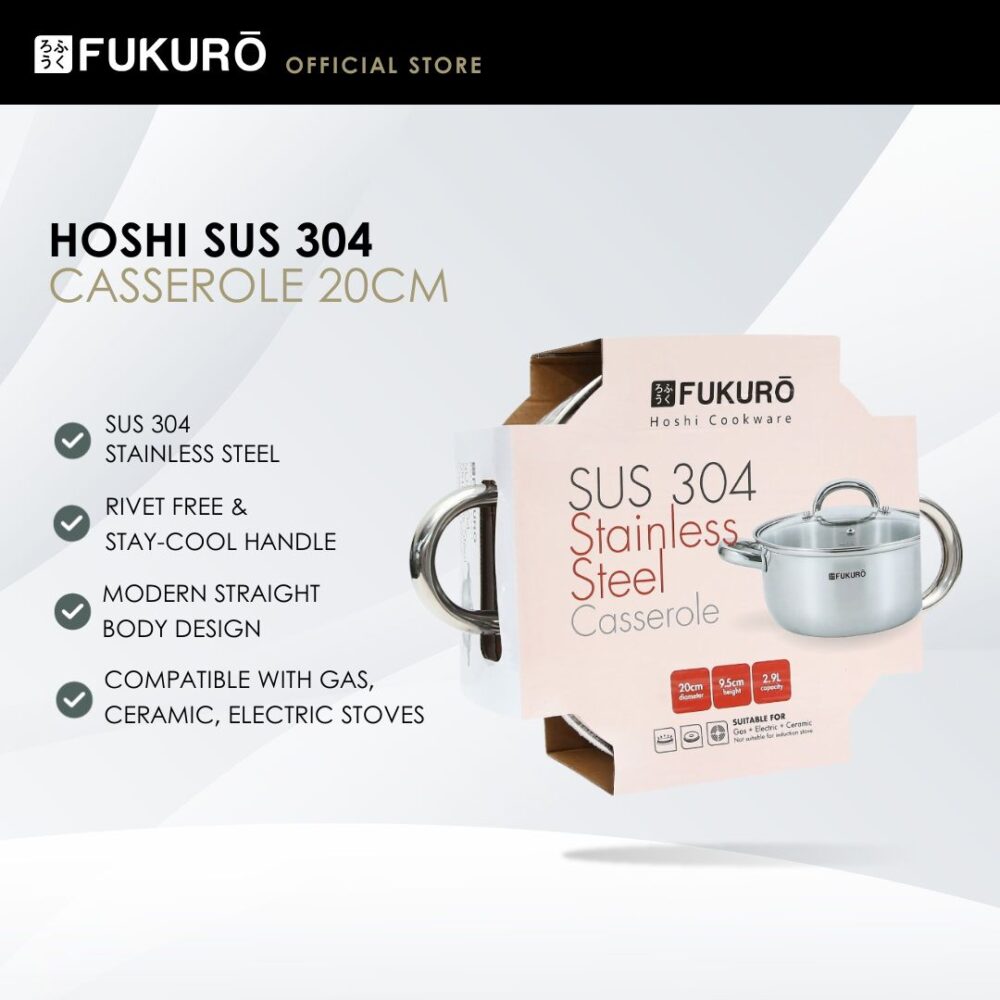
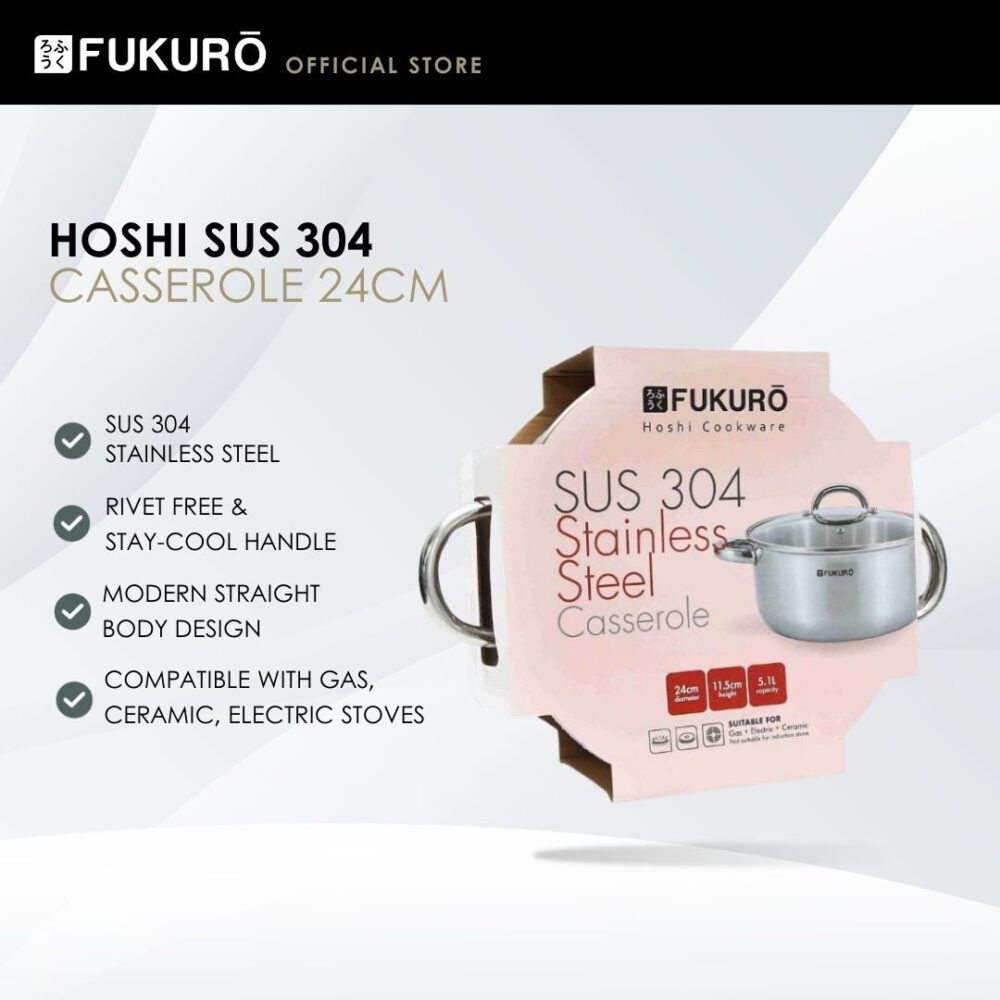
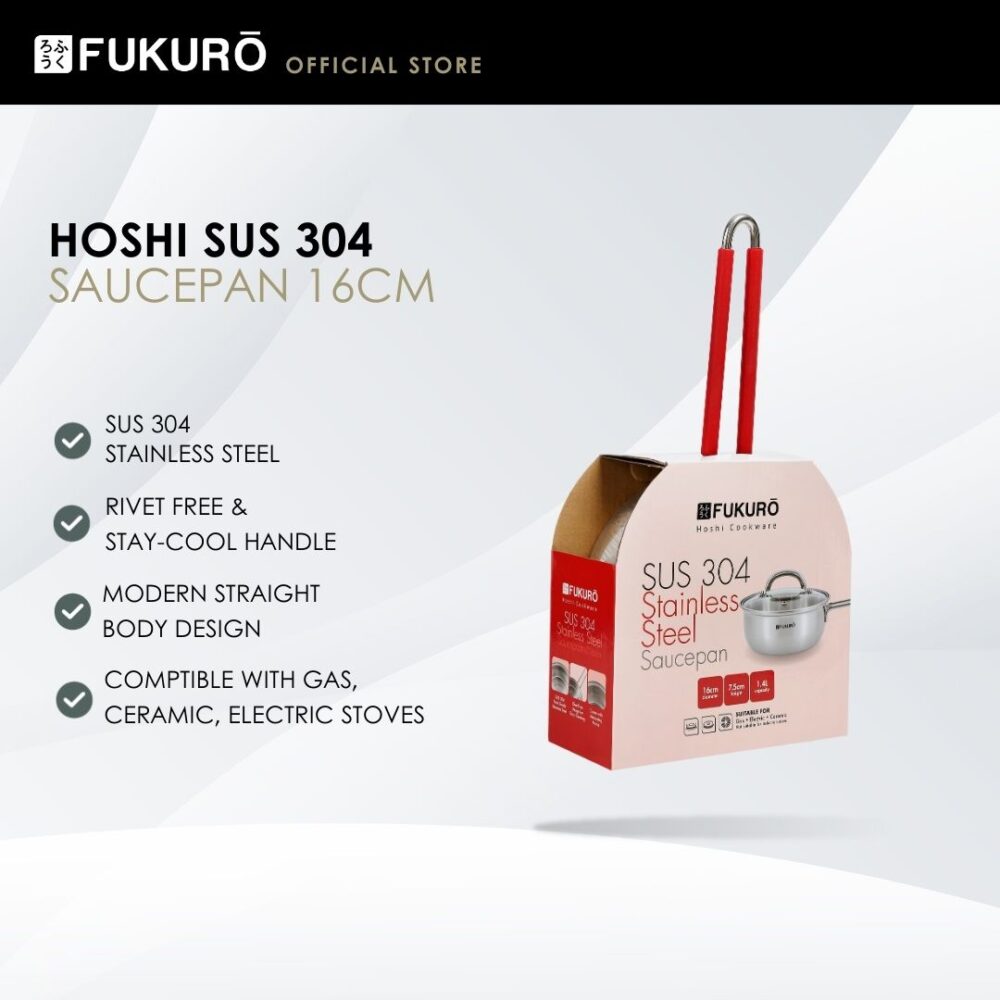
Yes, selected ranges only. Fukuro Yuga Stainless Steel Series is induction compatible, while Hoshi Stainless Steel Series is not. Please check the product details or base marking before use.
What happens if I use a non-induction stainless steel pot on an induction stove?
A non-induction stainless steel pot will not heat up on an induction cooktop because it does not have a magnetic base. This does not damage the pot. It simply means it is not compatible with induction technology.
Do stainless steel pots require special care to stay safe?
No special care is required. Simply clean after use and dry the cookware properly to maintain performance and appearance.
Is stainless steel cookware dishwasher safe?
Most stainless steel cookware is dishwasher safe, but hand washing is recommended to preserve the finish. Gentle cleaning helps maintain shine over time.
Why does soup burn at the bottom even with water inside?
This usually happens when the heat is set too high or the soup is not stirred regularly, causing ingredients to settle and scorch at the base. Stainless steel conducts heat efficiently, so using medium heat and stirring occasionally helps distribute heat evenly and prevents burning.
Why do white spots/ chalky marks appear after boiling water?
White spots are mineral deposits from water, not damage. They can be easily removed with vinegar or lemon juice.
Why are there rainbow stains on my stainless steel pot?
Rainbow discoloration is caused by heat reacting with minerals in the steel. It is harmless and can be cleaned with vinegar or stainless steel cleaner.
Why does the bottom of stainless steel cookware turn brown or gold?
This is heat discoloration caused by high cooking temperatures. It is common with stainless steel cookware and does not affect safety or cooking performance.
Is discoloration a sign of damage?
No, discoloration is purely cosmetic and does not affect the safety, performance, or usability of stainless steel cookware. It is a normal result of heat and minerals and does not indicate damage.
Can I still use stainless steel cookware with scratches?
Yes, stainless steel cookware can be safely used even if surface scratches occur. These marks are purely cosmetic and do not affect safety or cooking performance, so the cookware can be used normally without any special handling.
Can I use metal utensils on stainless steel cookware?
Yes, stainless steel can safely be used with metal utensils. Minor scratches are normal and it does not affect safety or cooking performance.
Does stainless steel cookware need special cleaning products?
No special products are required. For daily cleaning, water, mild dish detergent and a sponge are sufficient to keep stainless steel cookware clean and in good condition.
Can burnt stains be removed from stainless steel cookware?
Yes, soaking with warm water and using baking soda or gentle cleaners can remove burnt residue. Avoid steel wool to protect the surface.
will loosen residue safely without damaging the coating.
Does stainless steel cookware require more oil than non-stick?
Yes, slightly more oil is usually needed. This helps prevent sticking and improves cooking results.
Why does water leave marks after drying?
Water spots come from mineral residue. Drying the cookware with cloth after washing to prevent these marks.
Is stainless steel cookware safe for children’s meals?
Yes, it is non-toxic and does not release harmful substances. It is one of the safest cookware choices for family use.
Should I cool the pot before washing?
Yes, allowing the pot to cool slightly before washing helps prevent thermal shock and reduces the risk of warping. This simple step helps maintain the cookware’s shape and long-term performance.
Can I cook rice in stainless steel cookware?
Yes, rice can be cooked in stainless steel cookware with the correct water ratio and proper heat control. Using medium heat and avoiding high flames helps prevent sticking and ensures even cooking.