Fukuro Malaysia

FREQUENTLY ASKED QUESTION (FAQ)
Non-Stick Cookware
What is non-stick cookware used for?
Non-stick cookware is designed for cooking foods that require easy release and controlled heat, such as eggs, fish, pancakes, and delicate proteins. It allows consistent results with less oil while reducing the risk of food tearing, burning, or sticking during cooking.
What types of non-stick coatings are commonly used today?
Most modern non-stick cookware uses PTFE-based or ceramic-based coatings. Both are designed to be food-safe when manufactured and used according to industry standards. Fukuro Malaysia offers both PTFE-based and ceramic-based non-stick cookware, allowing users to choose between long-lasting smooth release or a ceramic surface preferred for lower-heat, lighter cooking styles.
Is non-stick cookware better than stainless steel?
Non-stick cookware is easier to use and requires less oil, making it ideal for everyday cooking and beginners. Stainless steel is more durable and better for high-heat cooking, but it requires more cooking technique and heat control.
Is PTFE non-stick coating safe for daily cooking?
Yes, PTFE coatings are stable and safe at normal cooking temperatures below approximately 260°C. Safety issues only arise when pans are severely overheated far beyond typical household cooking conditions.
Can non-stick cookware release toxic fumes?
Non-stick cookware does not release harmful fumes during normal cooking. Fumes may only occur if the pan is overheated empty at extremely high temperatures, which is avoidable with proper use.
Can I heat up an empty non-stick cookware?
No, non-stick cookware should not be heated empty, as the coating can overheat rapidly without food or oil to absorb heat. Repeated empty heating shortens the coating’s lifespan and reduces non-stick performance.
Why does oil pool or slide to the edges of the pan?
This is caused by slight thermal expansion or a naturally convex pan base under heat. It does not indicate a defect and does not affect cooking safety.
Can I use a non-stick pan with light scratches?
Yes, if the scratches are light and the coating is intact. You should stop using the pan when the coating is visibly peeling or flaking and the metal surface underneath can be seen. This is a clear sign the pan has reached the end of its usable life and should be replaced for safe, reliable cooking.
Does a scratched non-stick pan release harmful chemicals?
No. Scratches alone do not cause chemical release. Harmful exposure only occurs when the coating is destroyed by extreme overheating.
Can I cook without oil on non-stick pans?
Yes. Non-stick pans allow oil-free cooking, but using a small amount of oil helps protect the coating and improves heat distribution. This also helps extend the lifespan of the pan.
Can non-stick cookware be used on gas stoves?
Yes, it is compatible with gas stoves. Flames should not extend beyond the pan base to avoid overheating the sides and the handle.
Should non-stick cookware be seasoned?
No. Modern non-stick cookware does not need seasoning. Seasoning originated from traditional cast iron and carbon steel cookware, where oil must be baked into the metal surface to create a natural non-stick layer and prevent rust. Because of this long history, many people assume that all cookware requires seasoning. However, this is not true for modern non-stick cookware. Modern non-stick cookware uses factory-applied coatings such as PTFE and ceramic non-stick coatings. These coatings are applied under controlled industrial processes and cured at extremely high temperatures, making them naturally non-stick from the first use. Seasoning is not required. However, light seasoning can help provide extra protection and may reduce early wear and tear.
Why does food sometimes stick even on new pans?
This usually happens when the pan is overheated or used with too little oil, causing food to bond to the surface. Using low to medium heat, adding a small amount of oil, and allowing the pan to heat gradually will restore proper non-stick performance.
Is non-stick cookware suitable for professional kitchens?
It is commonly used for specific tasks like eggs and delicate proteins. High-heat tasks are handled by other cookware types.
Can I use non-stick cookware for boiling?
Yes, boiling water or noodles is fine.
Why does my pan lose non-stick performance faster than expected?
Frequent high heat, metal utensils, dishwasher cleaning, and improper storage can accelerate coating wear. Following proper use and care guidelines helps preserve non-stick performance and extend the pan’s lifespan.
My non-stick pans have some minor chips/ scratches, is it safe to use?
Small chips or scratches on the surface are generally cosmetic, not harmful. Whether it’s PTFE (normal non-stick coating) or ceramic coating, a minor chip does not cause coating particles to dissolve into food or release toxins. These coatings are chemically stable at normal cooking temperatures. Even if a small flake were to come off (in very rare situation) and swallowed, it would pass through the body harmlessly.
What is PTFE and PFOA?
PTFE (Polytetrafluoroethylene) is a non-stick coating used on cookware to create a smooth, low-friction surface that allows food to release easily during cooking. PFOA (Perfluorooctanoic Acid) was a chemical previously used in manufacturing but is not part of the finished coating. All Fukuro cookware is PFOA-free and safe for everyday cooking. We practise high level of quality control to ensure no harmful chemical is used in our manufacturing standards.
What is the difference between PTFE coating and ceramic coating?
PTFE coatings provide a very smooth cooking surface with excellent food release, making them well-suited for everyday cooking with low to medium heat. Ceramic coatings are PTFE-free and work best at gentler heat, but they typically require more careful use as their non-stick performance can wear faster over time.
Which coating has better non-stick performance?
PTFE coatings generally offer superior non-stick performance, providing smoother food release and more consistent results over time. Ceramic coatings still perform well but tend to lose their non-stick properties faster, especially with frequent high-heat use.
Can I use non-stick cookware every day?
Yes, non-stick cookware is designed for daily use when used with proper heat control and care. Cooking on low to medium heat and using suitable utensils helps maintain consistent performance and extends the cookware’s lifespan.
What should I do if food sticks to my non-stick pan?
Wash normally with mild detergent and soft sponge. If food is stuck, soaking the pan in water will loosen residue safely without damaging the coating.
Can I use metal utensils on non-stick pans?
No, metal utensils can scratch and damage the coating. Avoiding metal helps maintain both safety and performance.
Which utensils are best for non-stick cookware?
Silicone and wood utensils are recommended. They protect the coating while withstanding normal cooking temperatures.
Can I wash a non-stick pan immediately after cooking?
Always let the pan cool slightly before washing. This prevents sudden temperature changes that can stress and weaken the non-stick coating over time.
How do I clean non-stick cookware properly?
Allow the pan to cool completely, then wash it with water, mild dish detergent and a soft sponge. Avoid steel scrubbers or harsh cleaners, as gentle cleaning helps preserve the non-stick coating and maintain long-term performance.
Is Fukuro non-stick pan dishwasher safe?
Hand washing is recommended to preserve the non-stick coating and maintain long-term performance. Besides, some handles are not dishwasher safe, and repeated exposure to heat and detergent may cause damage or loosening over time.
Why does a non-stick pan sometimes smell burnt?
This usually comes from overheated oil or leftover food residue. Lowering heat and thorough cleaning resolves the issue.
Is Fukuro non-stick cookware suitable for induction?
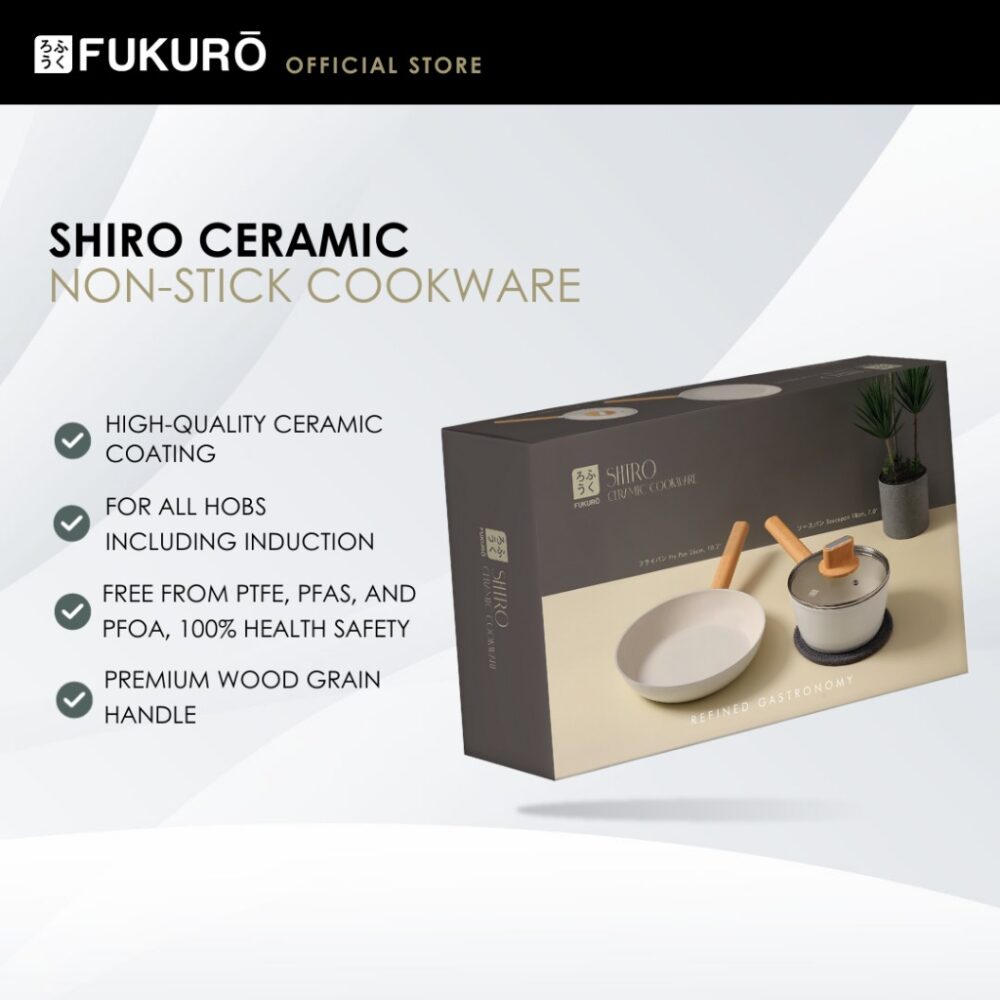
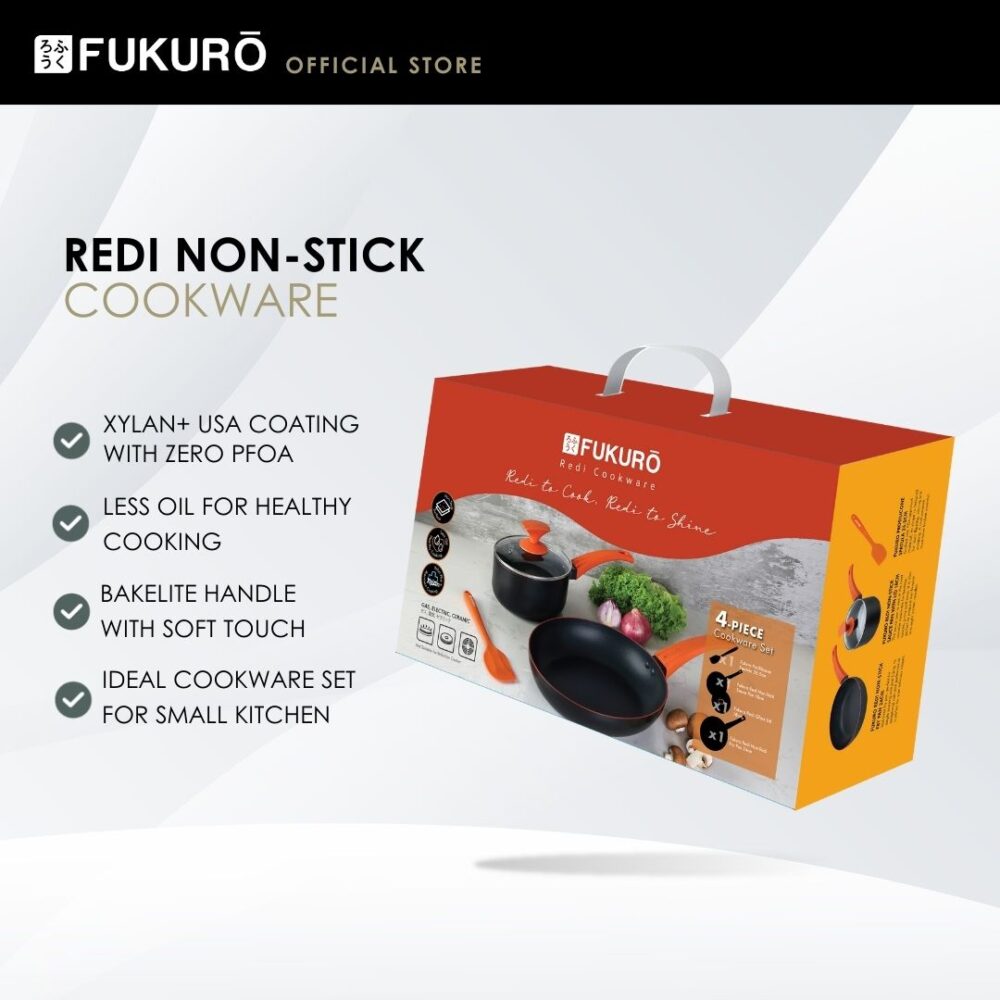
Yes, Fukuro offers several non-stick cookware ranges that are suitable for induction cooking, including the Kanzen, Shiro Ceramic, and Ishi Marble series. For non-induction stoves, the Redi series is designed for reliable performance on gas and other conventional cooktops.
How to lightly season non-stick cookware?
1. Wash the pan with soapy water and dry thoroughly
2. Apply a thin layer of cooking oil
3. Heat the pan on low to medium heat for 2–3 minutes
4. Turn off the heat and allow the pan to cool
5. Wipe away excess oil with a paper towel
Can I stack non-stick pans?
Yes, but place a protector or cloth between them. This prevents scratches and surface damage during storage.
Is non-stick cookware suitable for small kitchens?
Yes, it’s easy to clean, lightweight, and versatile. This makes it practical for limited space and daily use.
Is non-stick cookware safe for children’s food?
Yes, it is safe for preparing children’s food when used properly. Using moderate heat and avoiding overheating ensures safe cooking.