Fukuro Malaysia

FREQUENTLY ASKED QUESTION (FAQ)
Knives & Accessories
What type of knife should a beginner start with?
A chef’s knife is the best starting point because it handles most daily kitchen tasks with ease. It reduces the need for multiple knives and helps beginners build proper cutting skills safely.
Are heavier knives better?
Not always. A well-balanced knife offers better control and reduces hand fatigue compared to a knife that is simply heavy.
What is the difference between AISI 420 (X30Cr13) and SS 420 MoV (X50CrMoV15) steel?
AISI 420 offers good corrosion resistance and easy maintenance for daily use. X50Cr15MoV is heat-treated for higher hardness, providing longer edge retention and more precise cutting.
What stainless steel does Fukuro use for knives?
Fukuro knives are made using knife-specific stainless steel selected for sharpness, durability, and ease of sharpening. The Chef Series uses AISI 420 stainless steel for reliable everyday performance, while the Seido Series uses X50CrMoV15 stainless steel for improved hardness, edge retention, and corrosion resistance.
Which knife series is better for beginners, Chef’s Series or Seido Series?
Chef’s Series is ideal for beginners due to its ease of maintenance and comfortable grip. Seido Series suits users who want higher cutting precision and a more premium knife experience.
How do I maintain knife sharpness?
Regular honing keeps the blade aligned and cutting efficiently. When the knife starts struggling to cut, sharpening helps restore its original sharpness.
How often should I sharpen my knife?
Sharpen only when the knife no longer cuts cleanly after honing. Over-sharpening removes unnecessary steel.
Are two-stage knife sharpeners safe to use?
Yes, when used correctly on undamaged blades. They offer coarse and fine sharpening for efficient edge restoration.
Should knives be washed in a dishwasher?
No. Dishwashers can dull blades and damage handles due to heat and impact.
Why should knives be dried immediately?
Moisture can cause corrosion even on stainless steel. Drying helps preserve blade quality.
Are knife scratches a problem?
Surface scratches are normal and cosmetic. They do not affect performance or safety.
Can knives rust even if they are stainless steel?
Yes. Stainless steel resists rust but is not completely rust-proof, especially if moisture, food acids, or salt remain on the blade. Hand-washing with mild detergent, rinsing thoroughly, and drying the knife immediately after use help prevent rust and do not reflect poor knife quality.
Does rust mean the knife quality is poor?
No. Rust is usually caused by moisture or food residue left on the blade rather than the quality of the steel. With proper care, stainless steel knives remain durable and safe for long-term use.
Why use kitchen scissors instead of knives?
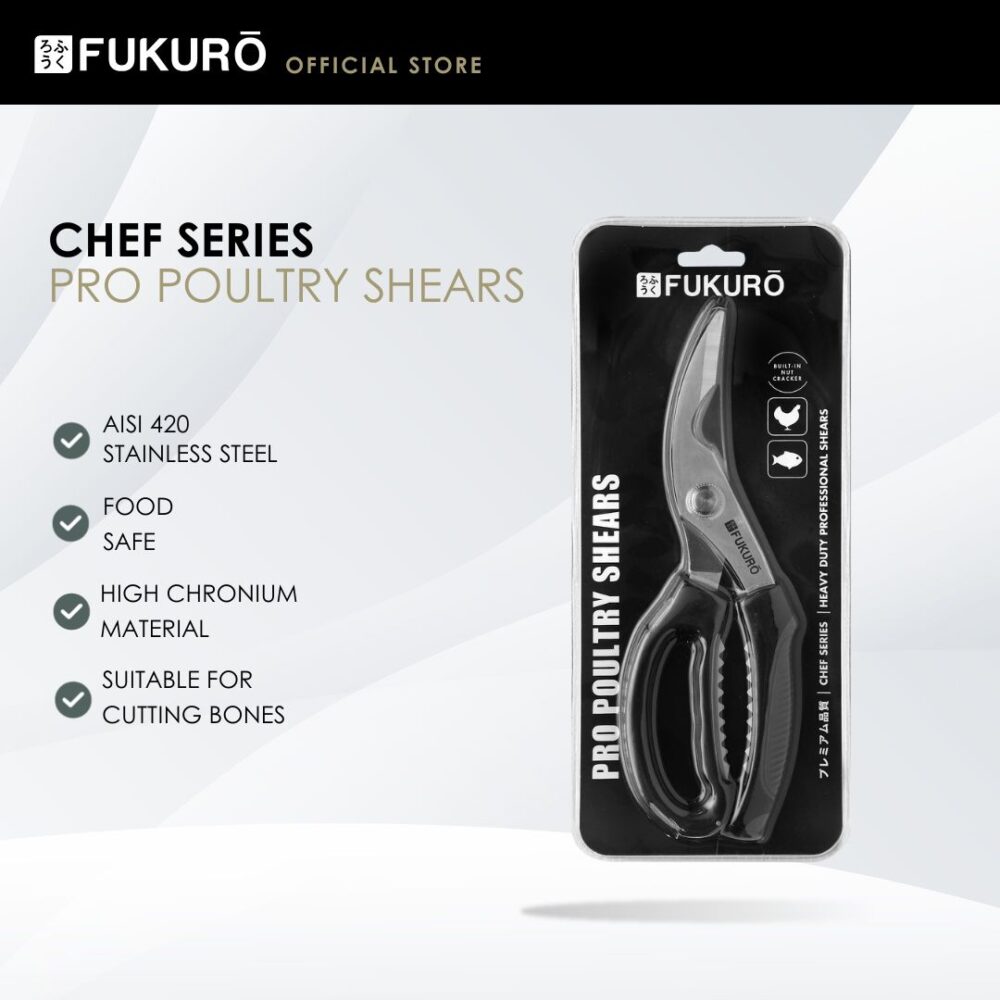
Kitchen scissors are ideal for herbs, poultry, and packaging. They add convenience and reduce unnecessary knife use.
What are the steps to maintain a knife in good condition?
Hand-wash and dry the knife immediately after use, then store it properly in a dry place. Regular honing and occasional sharpening help keep the knife performing well over time.
Are Fukuro knives food-safe?
Yes. All materials used are food-safe and suitable for kitchen use.
What is a paring knife used for?
Paring knives are used for peeling, trimming, and small detailed cuts. They offer precision where large knives are less practical.
What is a chef’s knife used for?
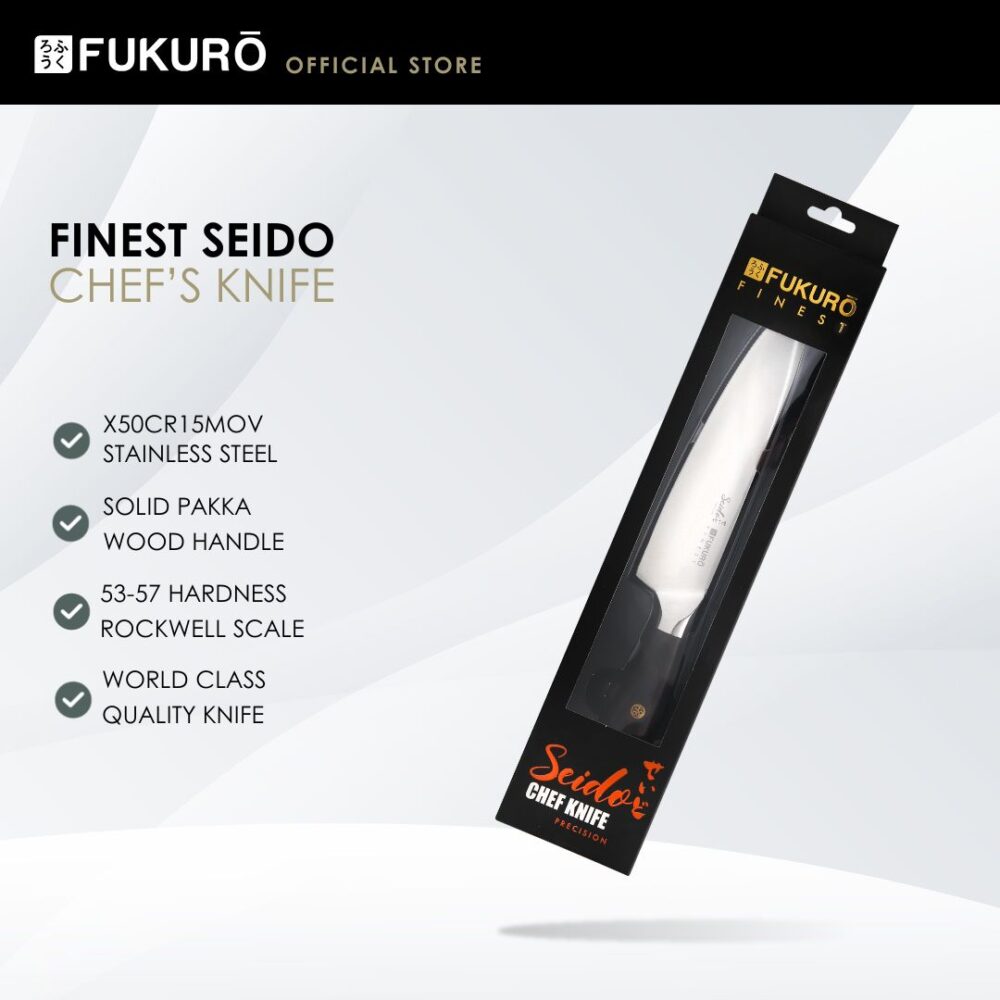
A chef’s knife is used for most everyday kitchen tasks such as slicing, chopping, dicing, and mincing. It is the most versatile knife and often the only knife a home cook needs.
What is a santoku knife used for?
A santoku knife is used for precise slicing, chopping, and push-cutting of vegetables, meat, and fish. Its flatter blade offers better control for clean, straight cuts.
What is a butcher knife used for?
A butcher knife is used for cutting, portioning, and trimming large cuts of meat. Its long, sturdy blade handles thick meat efficiently and safely.
What is a cleaver used for?
A cleaver is used for chopping, splitting, and transferring ingredients. Its wide blade provides power for tough tasks and doubles as a scoop for moving food.
What is a utility knife used for?
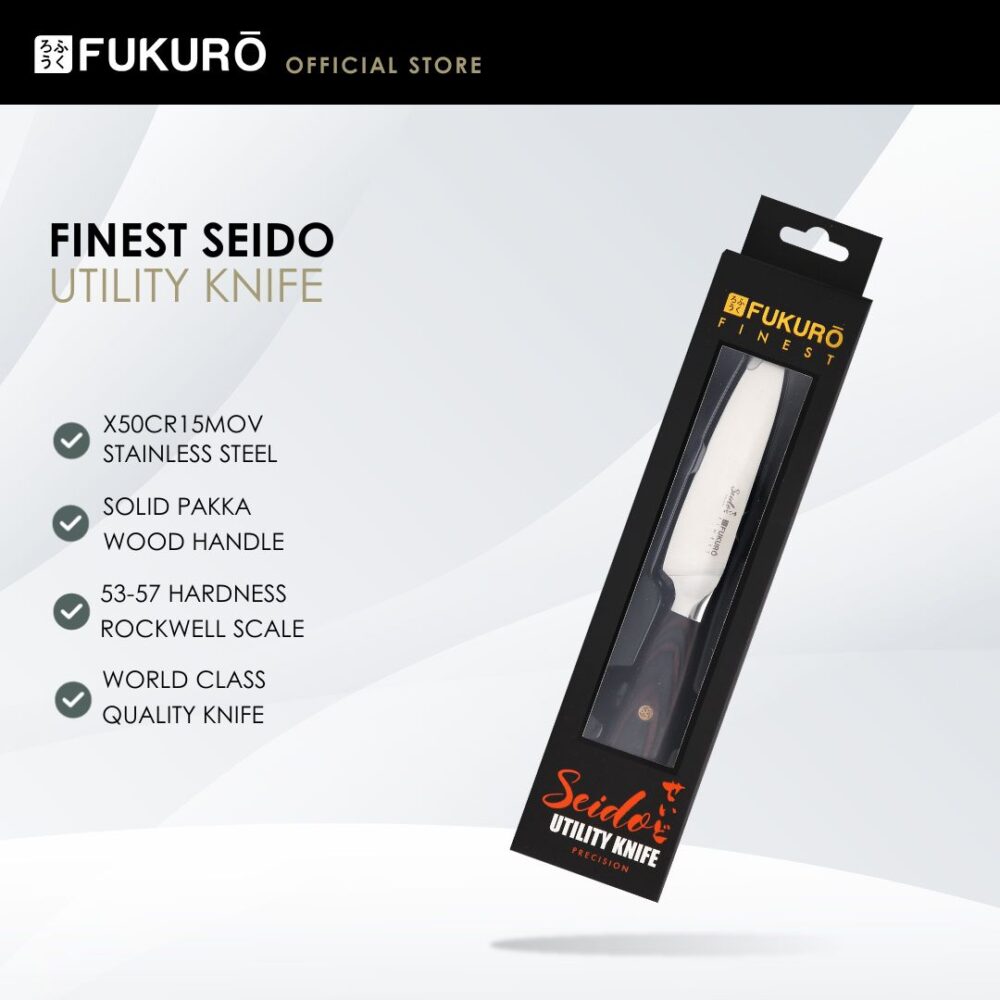
A utility knife is used for medium-sized tasks that are too small for a chef’s knife but larger than a paring knife. It is ideal for slicing fruits, sandwiches, and smaller ingredients with control.
How do I safely remove light rust from my knife?
Light surface rust can be removed by gently scrubbing with a soft sponge and mild detergent; avoid steel wool or harsh abrasives that may damage the blade. After cleaning, rinse well, dry completely, and store properly to maintain the knife’s condition.
In what condition should I change a knife?
You may consider changing a knife if the blade has deep cracks, severe rust that cannot be removed, or damage that affects safe cutting. Normal dullness, light surface rust, or cosmetic marks can usually be fixed with proper sharpening and care and do not require replacement.
Should I use glass or marble cutting boards?
No. Glass and marble boards are too hard and can quickly damage knife edges.
How do I choose the right cutting board?
Choose based on your priority: wood for knife care, bamboo for durability, and plastic for easy cleaning. Matching the board to your cooking habits helps extend knife lifespan.
Are surface marks or colour variations on bamboo chopping boards normal?
Yes. Bamboo is a natural material, so visible grain patterns and colour variations may appear. These are normal characteristics and do not affect durability, safety, or performance.
Why are there small holes or pores on the surface of the board?
Bamboo naturally contains tiny pores within its fibre structure. When bamboo strips are pressed and cut into boards, these pores may become visible on the surface and are not defects.
Do the holes on the chopping board affect hygiene or food safety?
No. When the board is cleaned and dried properly after use, these natural pores do not trap bacteria and are safe for daily food preparation.
Are natural bamboo grain marks and holes on the chopping board considered a defect?
No. Natural bamboo grain patterns and the holes on the chopping board are inherent characteristics of bamboo as a natural material and are not considered manufacturing defects.
How should I care for my bamboo chopping board?
Wash with mild detergent, rinse thoroughly, and dry completely after each use. Avoid soaking and prolonged moisture exposure to maintain the board’s condition.