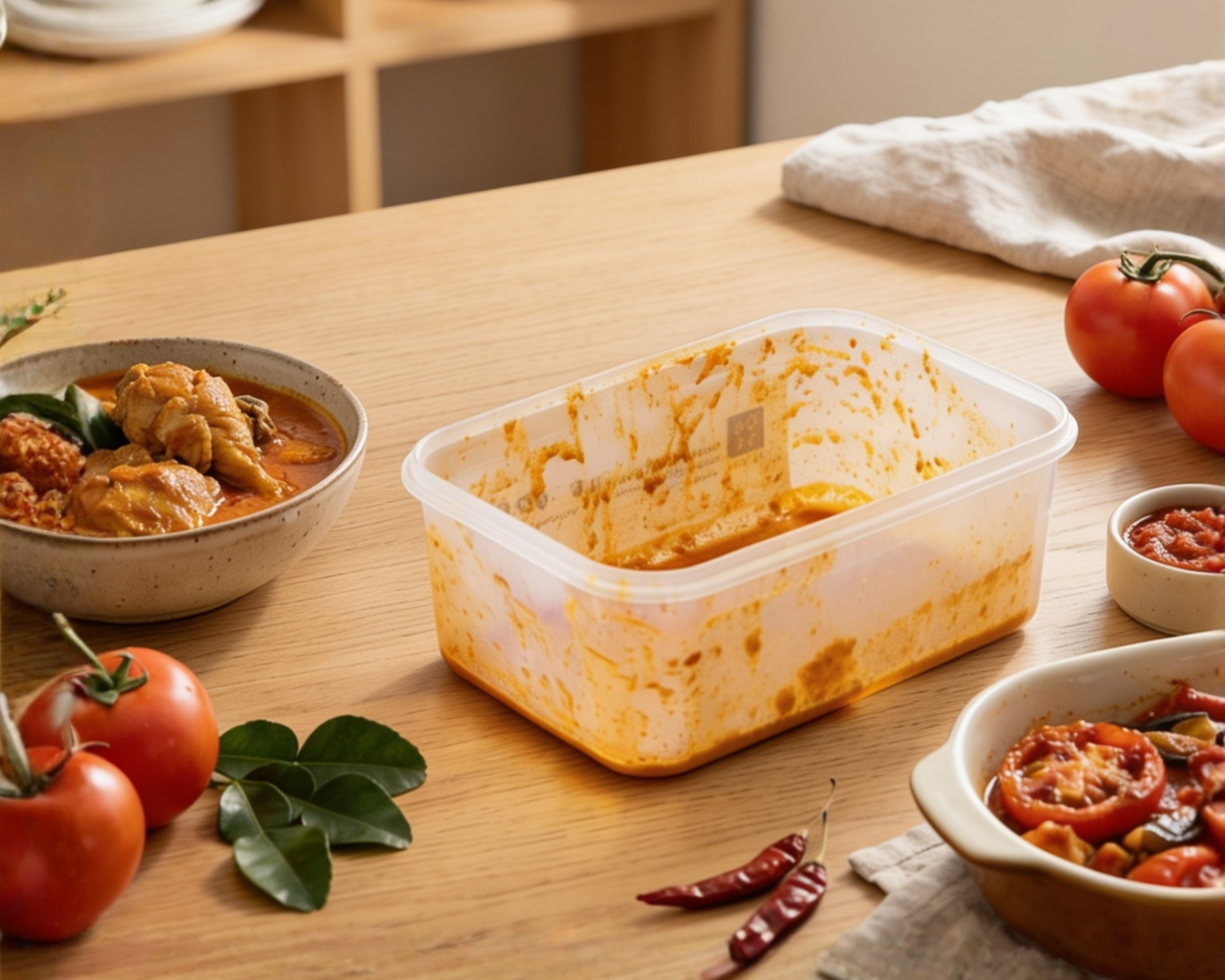
Have you ever opened your food container after storing curry, sambal, or tomato-based dishes, only to find orange or red stains that refuse to come off? It’s a common experience in many kitchens, especially when storing richly coloured meals. While the stains may look worrying, they’re usually not a sign that your container is damaged or unsafe to use.
Let’s explore why it happens and how you can keep your containers looking cleaner for longer.
Why Do Plastic Food Containers Get Stained?
Many everyday dishes contain natural pigments that give them their vibrant colours.
For example:
Sambal contains chilli pigments
Tomato-based sauces contain lycopene, a natural red pigment
Curries often contain turmeric, one of nature’s strongest yellow pigments
These pigments are usually mixed with cooking oils. Together, the oil helps carry the pigments, allowing them to cling more easily to the surface of plastic containers.
Unlike glass, plastic has microscopic surface pores that can gradually absorb these pigments, especially after repeated use.
Many everyday dishes contain natural pigments that give them their vibrant colours.
For example:
Sambal contains chilli pigments
Tomato-based sauces contain lycopene, a natural red pigment
Curries often contain turmeric, one of nature’s strongest yellow pigments
These pigments are usually mixed with cooking oils. Together, the oil helps carry the pigments, allowing them to cling more easily to the surface of plastic containers.
Unlike glass, plastic has microscopic surface pores that can gradually absorb these pigments, especially after repeated use.
Why Does Hot Food Make Staining Worse?
Temperature also plays an important role.
When food is placed into a plastic container while it’s still very hot, the warmth can make pigments and oils penetrate the surface more easily. The longer heavily coloured food remains inside the container, the greater the chance that stains will become noticeable.
This is why containers used frequently for curries, sambal, pasta sauces, or spicy stews often develop permanent-looking stains over time.
Are Stained Plastic Containers Still Safe to Use?
In most cases, yes.
Surface staining is generally a cosmetic issue rather than a food safety concern. It affects how the container looks but does not necessarily mean the container has become unsafe or unusable.
However, if a container is cracked, deeply scratched, or no longer seals properly, it may be time to replace it regardless of staining.
How to Reduce Staining on Plastic Food Containers
Let hot food cool slightly before storing
Rinse the container soon after use to prevent pigments from sitting for too long
Wash occasionally with baking soda to help lift stubborn stains and odours
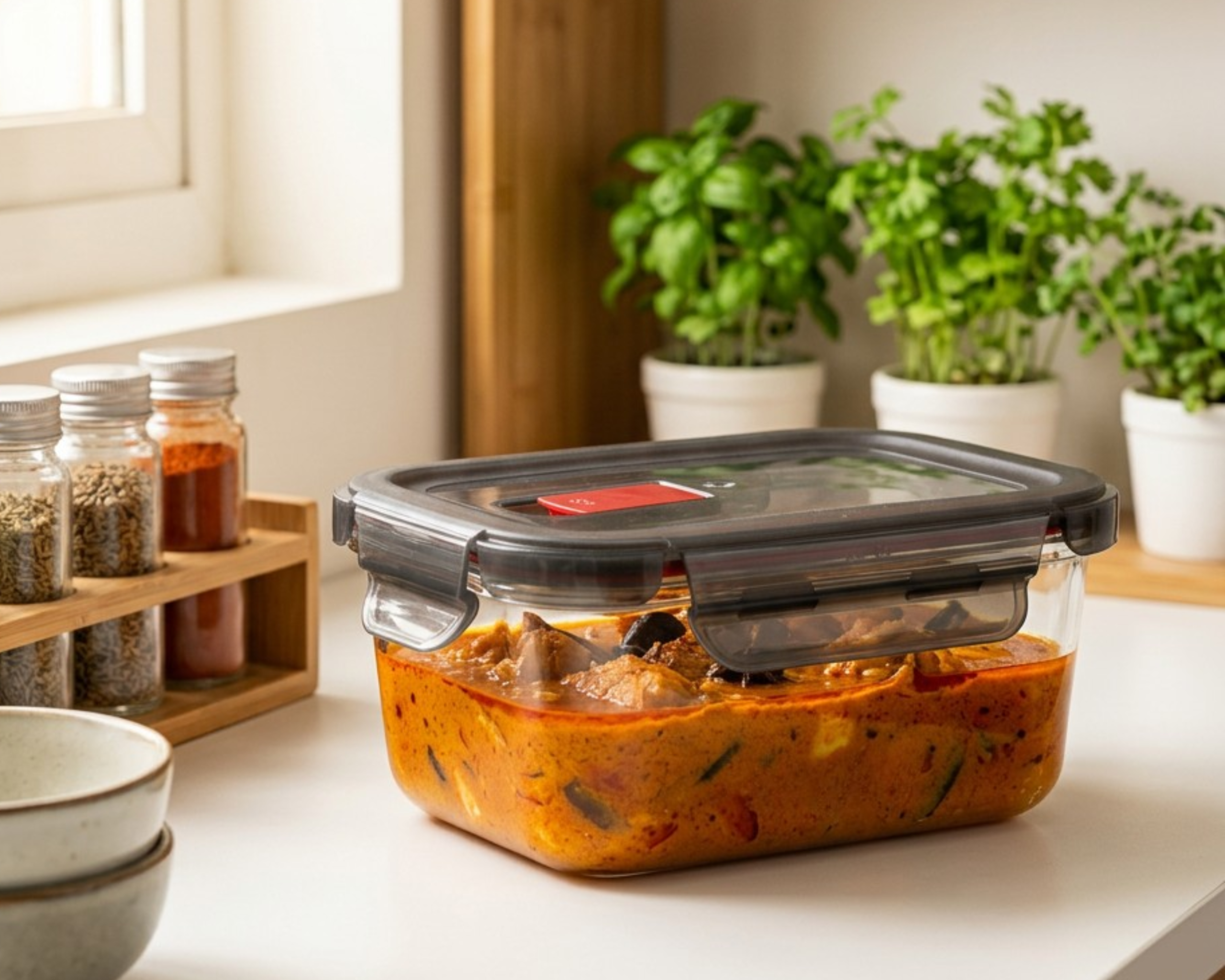
Reserve plastic containers for lighter-coloured foods and use glass containers for curries, sambal, and tomato-based dishes
Let hot food cool slightly before storing
Rinse the container soon after use to prevent pigments from sitting for too long
Wash occasionally with baking soda to help lift stubborn stains and odours
Reserve plastic containers for lighter-coloured foods and use glass containers for curries, sambal, and tomato-based dishes