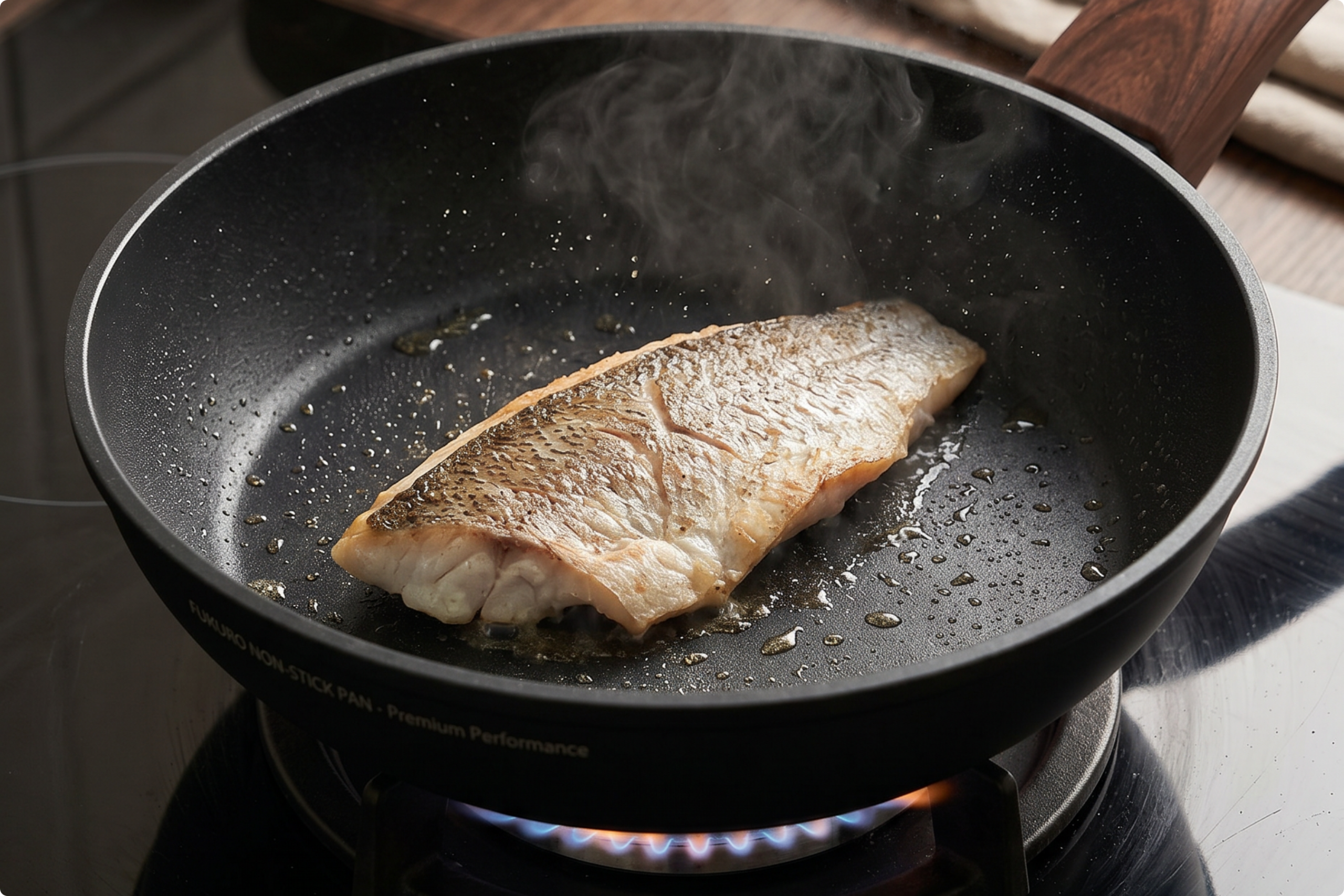
If your non-stick pan has started sticking, you might wonder: Is the coating damaged? Is the pan still safe to use?
The good news is that a non-stick pan does not become toxic simply because food starts sticking.
Why Does a Non-Stick Pan Start Sticking?
Non-stick coatings are designed to help food release easily from the cooking surface. However, their performance can gradually decrease with regular use.
Repeated heating, cooling, cooking and cleaning can slowly wear down the non-stick properties of the surface. Eventually, you may notice that eggs, meat or other ingredients no longer slide off as easily as they did when the pan was new.
This is mainly a cooking performance issue, rather than a sign that the pan has suddenly become toxic.
Non-stick coatings are designed to help food release easily from the cooking surface. However, their performance can gradually decrease with regular use.
Repeated heating, cooling, cooking and cleaning can slowly wear down the non-stick properties of the surface. Eventually, you may notice that eggs, meat or other ingredients no longer slide off as easily as they did when the pan was new.
This is mainly a cooking performance issue, rather than a sign that the pan has suddenly become toxic.
When Should You Be Concerned?
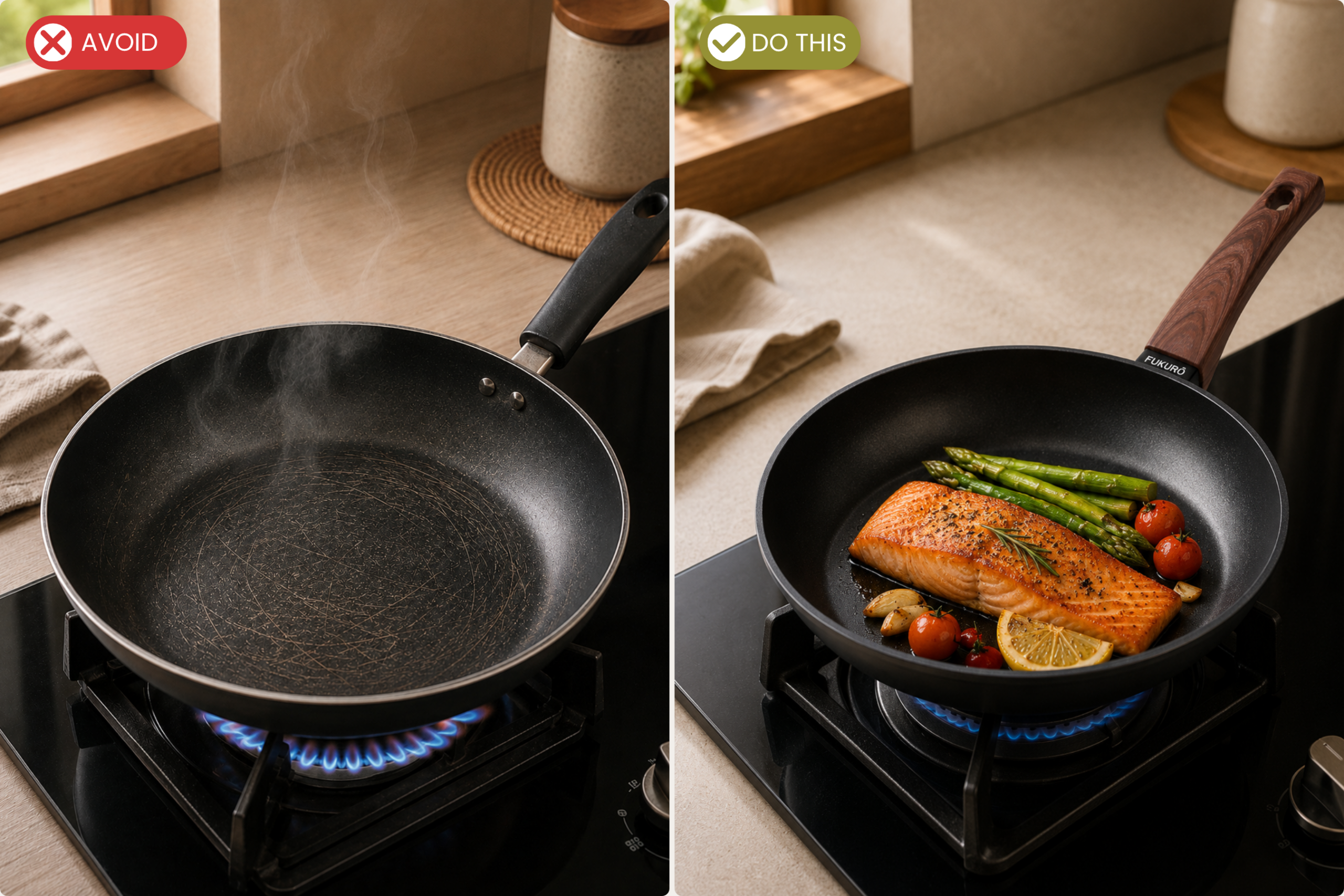
The more important safety concern with non-stick cookware is severe overheating.
If a non-stick pan is left empty over very high heat for an extended period, the coating can reach temperatures where it begins to break down and release fumes. Exposure to these fumes may cause temporary flu-like symptoms in people.
This is why non-stick cookware is generally best used over low to medium heat and should not be left heating empty over a strong flame.
How to Use Your Non-Stick Pan Safely
A few simple cooking habits can help protect the coating and extend the useful life of your cookware:
✅ Use low to medium heat for everyday cooking. ✅ Avoid overheating an empty pan, especially over high heat. ✅ Use silicone, nylon or wooden utensils to reduce scratching. ✅ Clean with a soft sponge instead of abrasive scrubbers. ✅ Replace the pan if the coating is heavily scratched, peeling or flaking, or if the base metal is exposed.
Key Takeaway
A non-stick pan starting to stick does not automatically mean it has become toxic. In most cases, it simply means the non-stick surface is no longer performing as effectively as it did when new.
The main safety concern to avoid is severe overheating, particularly heating an empty non-stick pan over very high heat.
With the right heat and proper care, you can help your non-stick cookware perform better and last longer.
📍 Shop Fukuro Malaysia on Shopee, Lazada, TikTok & our Official Website: fukuromalaysia.com