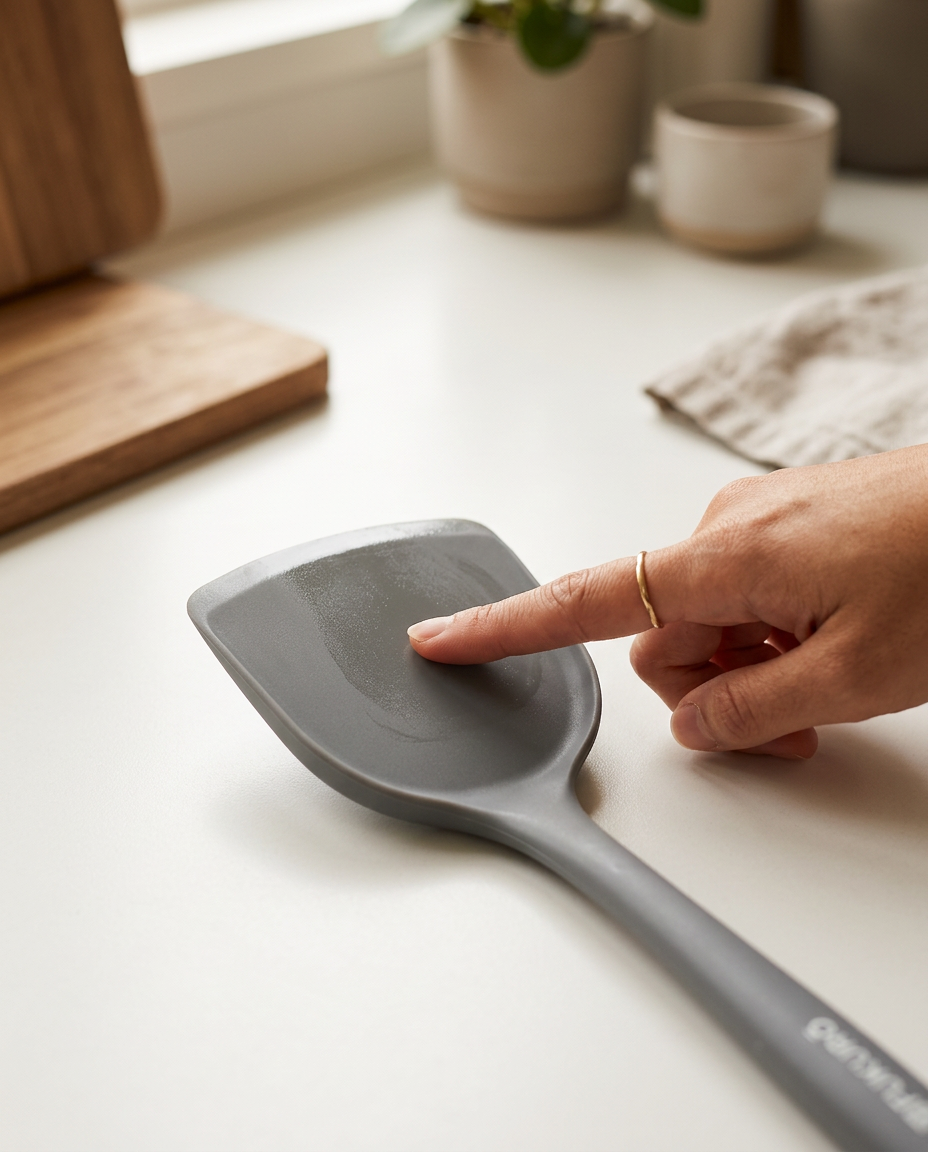
Silicone utensils are popular for their flexibility, heat resistance, and non-scratch surface, making them a favourite in many kitchens. However, after months or years of use, you may notice that the surface starts to feel sticky or tacky.
The good news is that this doesn’t necessarily mean your silicone utensil is damaged. In many cases, it’s simply caused by residue buildup and how the utensil has been used or stored over time.
What causes the sticky feeling?
One of the most common reasons is the gradual buildup of cooking oil and grease on the silicone surface. During everyday cooking, especially when preparing oily foods or cooking at high temperatures, tiny amounts of oil can cling to the material. Over time, these residues become more difficult to remove with regular washing, leaving the surface feeling sticky.
Another factor is long-term exposure to the environment. Silicone utensils that are left hanging in the open or stored on countertops for extended periods are constantly exposed to air, humidity, dust, and changing temperatures. These conditions can gradually affect the outer surface, causing it to become tacky more quickly than utensils that are properly stored.
One of the most common reasons is the gradual buildup of cooking oil and grease on the silicone surface. During everyday cooking, especially when preparing oily foods or cooking at high temperatures, tiny amounts of oil can cling to the material. Over time, these residues become more difficult to remove with regular washing, leaving the surface feeling sticky.
Another factor is long-term exposure to the environment. Silicone utensils that are left hanging in the open or stored on countertops for extended periods are constantly exposed to air, humidity, dust, and changing temperatures. These conditions can gradually affect the outer surface, causing it to become tacky more quickly than utensils that are properly stored.
Is It Still Safe to Use?
In most cases, yes. A sticky surface does not automatically mean the silicone has become unsafe or unusable. It is often a sign that oil residue has accumulated on the surface rather than the material itself breaking down.
However, if the utensil remains sticky after thorough cleaning, develops cracks, tears, or starts to deteriorate, it is recommended to replace it to maintain good kitchen hygiene and cooking performance.
How to Reduce Stickiness
❌ Avoid excessive heat exposure ✅ Soak in warm water with baking soda and wash thoroughly to remove oil residue ✅ Store in a clean, dry place ✅ Keep products properly protected when not in use