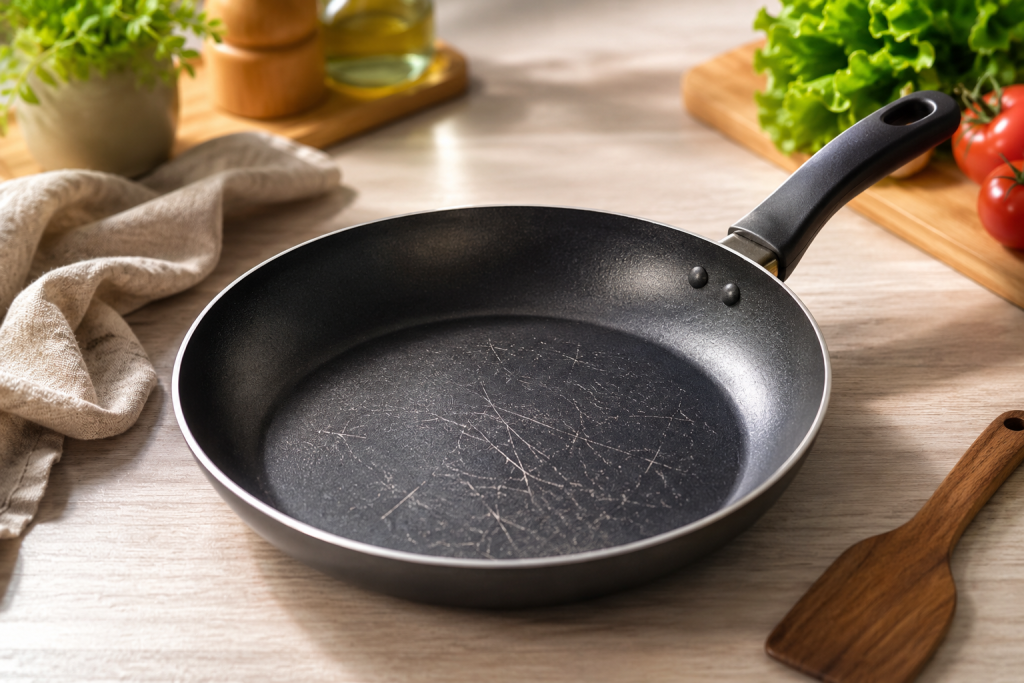
Non-stick cookware makes everyday cooking easier, especially for low-oil cooking and easy cleaning. But after months or years of use, many people start noticing scratches on the surface and immediately wonder. Is it still safe to use? 🤔🍳
The good news is, light scratches on a non-stick pan are usually still safe for normal cooking. Small surface marks do not automatically release harmful toxins into food. In most cases, the bigger issue is not safety, but cooking performance over time.
Modern non-stick cookware is designed for daily cooking use, so minor wear and tear can happen naturally, especially with frequent cooking and cleaning. However, understanding the difference between light cosmetic scratches and serious coating damage is important for knowing when a pan should still be used or replaced.
When Should You Replace a Non-Stick Pan?
A non-stick pan should be replaced when the coating becomes heavily damaged and no longer performs properly.
Some common signs include:
• Deep scratches across the cooking surface • Peeling or flaking coating • Exposed base metal underneath • Food sticking badly even with proper heat control
A non-stick pan should be replaced when the coating becomes heavily damaged and no longer performs properly.
Some common signs include:
• Deep scratches across the cooking surface • Peeling or flaking coating • Exposed base metal underneath • Food sticking badly even with proper heat control
At this stage, the pan may start heating unevenly and loose coating particles could mix into food during cooking. While occasional small scratches are usually manageable, severe coating damage means the cookware is no longer functioning as intended.
Replacing a badly damaged pan helps maintain better cooking performance, easier food release, and more consistent heating in daily cooking.
How Long Does a Non-Stick Pan Last?
A good-quality non-stick pan typically lasts around 1 to 3 years with normal home use. The actual lifespan depends heavily on cooking habits, heat levels, and daily care.
Frequent high-heat cooking, overheating an empty pan, or using metal utensils may shorten the lifespan of the coating much faster. On the other hand, gentle cooking habits can help maintain the non-stick surface for a longer period.
5 simple habits that help extend non-stick cookware lifespan:
• Use low to medium heat (staying below around 260°C) for everyday cooking • Avoid overheating an empty pan • Use silicone, nylon, or wooden utensils • Allow the pan to cool before washing • Avoid abrasive scrubbers during cleaning
A good-quality non-stick pan typically lasts around 1 to 3 years with normal home use. The actual lifespan depends heavily on cooking habits, heat levels, and daily care.
Frequent high-heat cooking, overheating an empty pan, or using metal utensils may shorten the lifespan of the coating much faster. On the other hand, gentle cooking habits can help maintain the non-stick surface for a longer period.
5 simple habits that help extend non-stick cookware lifespan:
• Use low to medium heat (staying below around 260°C) for everyday cooking • Avoid overheating an empty pan • Use silicone, nylon, or wooden utensils • Allow the pan to cool before washing • Avoid abrasive scrubbers during cleaning
Proper Care Matters More Than Small Scratches
Many people assume a small scratch means a non-stick pan immediately becomes unsafe, but that is not usually the case. In reality, daily cooking habits and proper care have a much bigger impact on cookware performance and longevity.
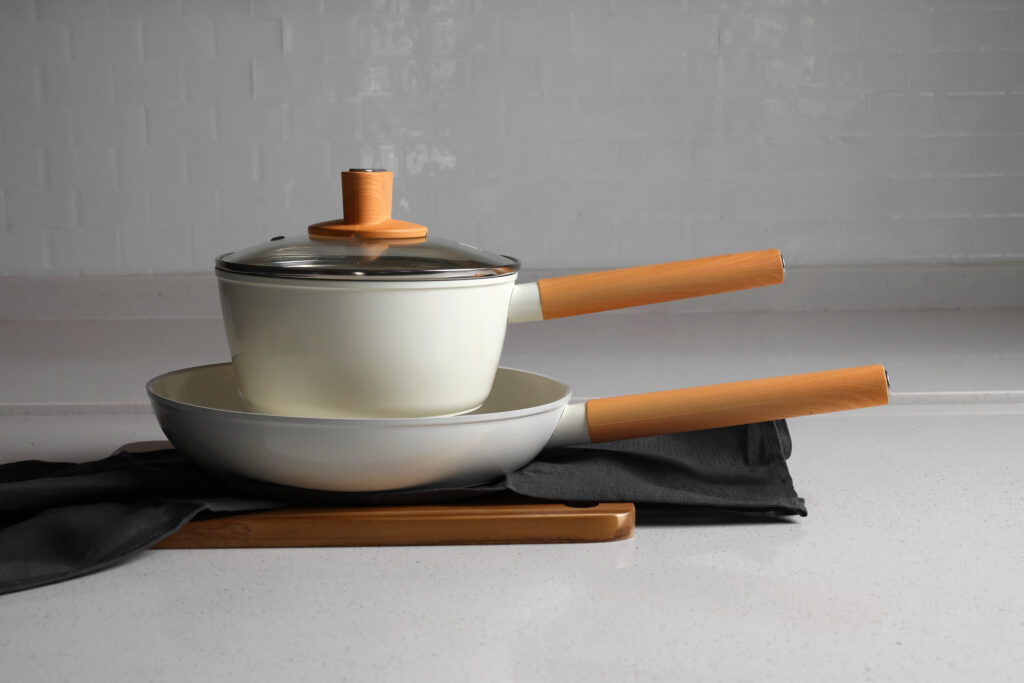
At Fukuro, our cookware is designed to support comfortable everyday cooking with practical care and long-term usability in mind. With proper heat control and gentle daily use, non-stick cookware can continue performing well for a long time.
Taking care of your cookware, cooking within recommended heat levels, and replacing pans only when the coating becomes badly damaged helps create a safer, healthier, and more enjoyable cooking experience every day.